 By
By
There are easier ways to finance a trip to a world championship than selling brownies. María Esmeralda Hernández Salinas did not have the luxury of choosing one.
The 17-year-old from Mazatlán, Mexico, had been in powerlifting for less than a year when she earned a place on Mexico’s team for the 2026 IPF Junior and Sub-Junior World Championships in Sun City, South Africa. Getting strong enough to compete was only part of the problem. Getting there cost money her family did not have.
So they went to work. They held raffles, sent sponsorship requests, and made appeals for support. Her older brother, Héctor, who also qualified for the championships, worked. Their parents searched for donors. Esmeralda sold brownies.
The family estimated it could cost as much as 180,000 pesos (10,600 USD) to get both siblings to South Africa. That detail matters. In smaller sports, qualifying for a world championship does not necessarily come with a plane ticket. Athletes and families can spend as much energy finding money as they do finding another kilogram in the weight room.
Esmeralda’s path was even more unlikely. Less than a year earlier, she moved from jazz to powerlifting after following her brother into a sport that initially didn’t interest her. At Mexico’s national championships in March, she lifted enough to earn a place on the national team. Then came the question of whether she could afford to use it.
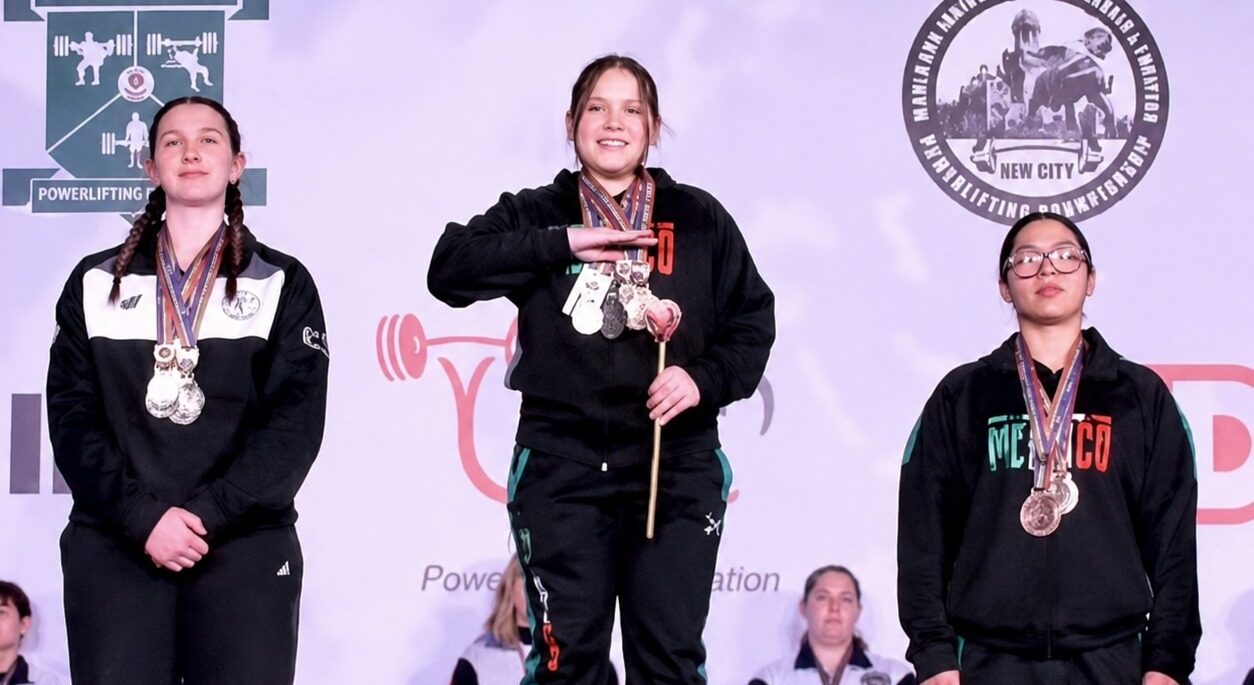
She could. On Aug. 23, during the world championships held Aug. 18-29, Hernández stepped onto the platform in the Sub-Junior 84-kilogram (185-pound) class in Sun City.
She opened with a 170-kilogram (375-pound) squat, the best in the field. She added an 80-kilogram (176-pound) bench press and a 175-kilogram (386-pound) deadlift for a total of 425 kilograms (937 pounds).
That was 17.5 kilograms (39 pounds) better than New Zealand’s Eva Vassiliou and enough to make Hernández a world champion.
Mexico’s Samantha Silva Gómez finished third at 387.5 kilograms (854 pounds). Hernández did not sweep every lift. Vassiliou beat her in the bench press and deadlift. But powerlifting rewards the total, and across all three disciplines Hernández had built the strongest day.
That is what makes the story better than a simple medal report. A teenager who had barely been in the sport a year was selling brownies to help finance the biggest competition of her life. Weeks later, she was standing atop a world championship podium in South Africa while Mexico’s national anthem played.
We tend to describe athletes as “hungry” when they chase championships. Hernández’s story offers a better word: resourceful. Talent got her into the competition. Strength won it. But before any of that could happen, there were brownies to sell.