
 By
Mexico’s women are going to the 2028 Olympics in a sport that has never appeared on the Summer Games program. They earned their place the hard way, surviving a one-point game against Great Britain in Germany, and now have nearly two years to prepare for a shot at an Olympic medal in Los Angeles.
The breakthrough came Aug. 16 at the World Flag Football Championships in Düsseldorf, Germany. Mexico defeated Britain 20-19 for the bronze medal and one of the first places in the inaugural Olympic tournament in 2028. The result put Mexico alongside the United States and Canada as one of the first three women’s teams to qualify.
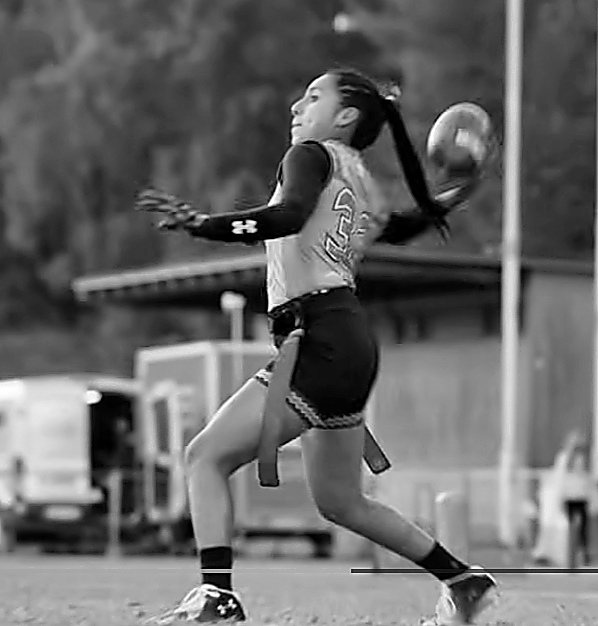
For quarterback Diana Flores, the moment paid off years of building a sport that still surprises people who associate American football with helmets and heavy contact. Flag football replaces tackling with pulling a flag from a ball carrier’s belt. The game moves quickly, and its passing, footwork, and split-second decisions reward athletes who can create space.
Mexico arrived in Germany with a reputation to defend. The women won their group with victories over host Germany, Slovenia and Italy, then edged Spain 27-26 in the quarterfinals. Canada ended their championship hopes in the semifinals, leaving one final opportunity to reach Los Angeles.
Against Britain, Mexico built a 20-6 lead before the British mounted a comeback. Two touchdowns brought them within a point, and a late two-point conversion attempt nearly turned the game around. British receiver Emily Kemp caught Jess Allen’s pass at the back of the end zone, but her left foot landed out of bounds. Mexico held on, winning a bronze medal that carried something even bigger: an Olympic invitation.
The team is more than one familiar name. Players with ties to Tecnológico de Monterrey include Flores, Victoria Chávez, Ángela Funes, Andrea Martínez, and Ximena Cuate. Their presence reflects a development system that has helped Mexico compete with countries where American football receives far greater attention. The national team’s achievement also gives younger girls a clear destination for their own ambitions. Flores has become one of the sport’s most visible advocates, appearing in an NFL Super Bowl advertisement and writing a book to introduce flag football to new audiences. Her celebrity has helped draw attention to teammates whose work rarely makes headlines.
Unfinished business remains on the men’s side. Mexico reached the bronze-medal game in Düsseldorf but lost 34-26 to Canada in overtime. The men finished fourth without an Olympic berth and must pursue another route through continental competition and the final qualification process.
The Olympic field will be small: just six teams each for women and men. The United States qualifies automatically as host, and Canada won the women’s world title in Germany. Mexico has secured its country’s place, although the players who will wear the uniform in Los Angeles have yet to be selected.
For a country accustomed to celebrating Olympic success in diving, boxing and taekwondo, flag football offers a different possibility. Mexican women will arrive at the 2028 Games with international experience, a close-call victory behind them, and a chance to make history in a brand-new Olympic event.